
A hookah bowl is a small clay, silicone or glass cup, and it shapes both the flavor and how long your session lasts. Put juicy tobacco in a bowl with holes in the bottom and the juice drips into the base, taking some of the flavor with it. Pack dark leaf loosely and it overheats the moment the coals go on. The whole process, from water to first puff, is in our guide on how to set up a hookah. This post is only about the bowl.
What a hookah bowl does
The bowl sits on top of the stem and holds the tobacco. Over it goes foil or a heat management device (HMD) with the coals, so the tobacco heats from above and makes smoke that travels down the stem into the base. Some people in Serbia call it a lula (pipe), and listings sometimes just say “glina” (clay). Take a look at it on the 3D model.
Hookah bowl types
By shape, you're mostly choosing between two: bowls with holes in the bottom and phunnel bowls with a spire in the middle. Then there are vortex bowls and fruit heads.
Egyptian (classic) bowl with holes
The bowl most people picture. It usually has five holes in the bottom, often comes with the hookah, is cheap and easy to replace. The problem is the juice: modern tobaccos are moist, the juice drips through the holes into the base and the flavor fades. So it's best for drier, traditional tobaccos. When you pack it, check that no hole is blocked by leaf, and plan on foil, because an HMD usually doesn't work on an Egyptian bowl.
Phunnel (funnel) bowl
A phunnel has no holes in the bottom. In the middle there's a raised spire (a little tube) with an opening at the top, above the tobacco, so the juice doesn't drip down the stem. One Belgrade store calls that opening the “volcano.” Tangiers came up with this bowl in the early 2000s, for its own tobacco, which gets packed dense. Today it works with every tobacco and is ideal for juicy ones. It takes both foil and an HMD, and some have a rim made just for an HMD. You need a bit more skill with it, since with a bad pack only the top layer of tobacco burns.
Vortex bowls are similar: the same spire, but with three or four small holes on the side. The draw is a little harder than on a phunnel.
Fruit heads
At lounges you'll also see hookah served on fruit: most often pear, apple, kiwi, orange, watermelon, pineapple or lemon. It gets covered with foil that has small, evenly spaced holes. Fruit is cold, so you may need more coals. The rind has to stay thick, because the juice and heat work on the fruit and a thin head starts to wobble.
Egyptian, phunnel and vortex at a glance
| Bowl | Openings | Tobacco juice | Best with | Watch out for |
|---|---|---|---|---|
| Egyptian | usually five holes in the bottom | drips through the holes into the base | drier, traditional tobaccos | the holes must stay clear, and a dense pack blocks them |
| Phunnel | one opening at the top of the spire | stays in the bowl | all tobaccos, especially juicy ones; dense packs | with a bad pack only the top layer burns; takes foil or an HMD |
| Vortex | 3–4 small holes on the side of the spire | stays in the bowl | all kinds of tobacco | draws a little harder than a phunnel |
What bowls are made of: clay, ceramic, silicone, glass
The material decides how fast the bowl heats up and whether it soaks up flavor.
Glazed clay bowl
Considered the standard. It takes in heat and gives it off slowly, so it forgives mistakes. The glaze keeps the bowl from soaking up juice, so yesterday's strawberry doesn't end up in today's mint.
Unglazed clay bowl
It's porous and soaks up moisture and flavor. Once it's saturated, you boil it in water (see cleaning below).
Ceramic bowl
Hookah Vault, a big gear retailer, writes that ceramic heats up faster and less evenly than clay, so you get hot spots. It also cracks more easily.
Silicone bowl
It doesn't break and doesn't need a grommet, so it's handy for travel. It heats up faster. It's usually a hybrid with glass, metal or ceramic inside, because pure silicone doesn't hold heat well.
Glass bowl
It doesn't absorb flavor. Cheap glass bowls are hard to clean and break more easily. Glass has less of a “buffer” than clay, so you have to watch the heat more closely.
“Stone” bowl
The name can fool you: the Oblako Stone Phunnel is handmade glazed ceramic from Russia. For the 900-dinar “stone” bowl sold in Belgrade, the material isn't listed, so ask.
How to pack a hookah bowl
The start is almost the same for every bowl. Break up the tobacco so there are no clumps, sprinkle it in evenly and level it a little below the rim. The rest depends on how firmly you press it down.
You just sprinkle the tobacco in, no pressing, and leave about 2 mm of space below the foil or HMD. Works best with juicy blonde-leaf tobaccos, and according to Mason, a gear manufacturer, it's how you pack Serbetli. The bowl doesn't last as long and needs more attention to heat.
Fill it fluffy, then tap it down lightly. Fumari (US) says this is the standard at lounges. According to Mason, it's how you pack Al Fakher, Adalya and Element.
Press the tobacco in firmly and evenly, but still below the top. It's almost always for dark leaf, Tangiers for example, and it works in a phunnel. In an Egyptian bowl, pressed tobacco would block the holes.
Fill it fluffy to the top, press lightly and add more, until it's mounded above the rim. It's for tobaccos that need a lot of heat, most often Haze. Don't mix it up with a dense pack, which stays below the top.
How you pack depends mostly on the tobacco. Blonde leaf is washed and milder, so you pack it fluffy. Dark leaf (unwashed or fermented) has more nicotine and needs a denser pack and more heat. How much denser depends on who you ask. For most modern dark brands (Must Have, Darkside), Hookah Vault recommends semi-dense. Mason's take on Darkside: fluffy to the top, then press lightly. Which brands are blonde leaf and which are dark is in our post on the best hookah tobaccos.
Phunnel bowls in particular. For a short session or when you're smoking alone, fill it halfway. For a long session with friends, go up to just below the top of the spire. Amy USA's website says not to poke a hole in the foil right in the middle, above the spire, because hot air slips past the tobacco there. Poke the holes in circles, working from the edge toward the middle.
Haze shows how much the advice varies. The owner of Haze recommends an overpack up to the foil, toothpick-sized holes and one more coal than usual. B2 Hookah's website says: with an HMD, exactly to the rim and no higher, and three coals. Four, they say, is too many. Try both.
How many grams of shisha per bowl
A regular bowl holds 10–12 grams of tobacco, a bigger one 15–20. But the grams also depend on the pack. Mason works it out on a bowl that holds 22 grams when packed completely full: about 10 g goes in fluffy, 15 standard, about 20 dense.
| Bowl | Tobacco |
|---|---|
| Clay phunnel, 7.5 cm wide (Cosmo HoReCa) | 12–20 g |
| Turkish bowl with holes (Cosmo Turkish Predator) | 18–22 g |
| Oblako Stone Phunnel | 20–25 g |
| Tangiers Pico phunnel, dense-packed Tangiers | about 15–20 g |
| Tangiers Small phunnel, dense-packed Tangiers | about 25–30 g |
The figures come from manufacturers and retailers and apply to their own bowls.
Weigh it once on a kitchen scale to see how much tobacco fits in your bowl, and remember the number. A 50-gram pack lasts three to five bowls, depending on the bowl, and the other running costs are in our post on buying your first hookah.
Foil, HMD and coals
Foil is the oldest and cheapest option. Get heavy-duty foil, stretch it tight so it's smooth and poke small holes with a toothpick in a spiral or grid. Loose foil gives weak smoke. Common mistakes are too many holes (hot spots) and foil that doesn't sit tight against the rim.
An HMD is a metal cup that holds the coals and sits between them and the tobacco, so it controls how much heat gets through (see it in 3D). The Kaloud Lotus is considered the first device of its kind. In Serbia people often say “kaloud” or “kalud” for any HMD, and listings sometimes call it a “dimnjak” (chimney).
The original Lotus I+ costs about $60. According to the manufacturer, it fits most standard bowls, it's made for two large 25 mm coconut cubes (no quick-light charcoal) and it lasts up to an hour without adding coals. Once the coals are in, Kaloud says to wait at least 5–8 minutes before the first puff. If your bowl is Egyptian, try the HMD on it before you buy.
The lid on the Lotus works like this: no lid gives the least heat, the lid with open slots gives medium heat, and the lid with closed slots gives the most. When you need to cool the bowl down, take off one coal, open the slots or remove the lid.
An HMD is easier to adjust and more forgiving. Foil is cheaper, and if you know what you're doing, it gives you full control. For a beginner, an HMD makes sense.
Coals. Usually two to three coconut charcoal cubes (see them in 3D). For Darkside, Mason suggests three at the start and two with the lid on once the bowl heats up. A kilo of cubes in our listing is 850 dinars (€7), which gets you 64 cubes, 26 mm each. According to the US CDC, hookah charcoal can give off a lot of carbon monoxide, metals and cancer-causing substances, and the water in the base doesn't filter the smoke. If you smoke indoors, air out the room.
How to clean a hookah bowl and prep a new clay one
- After smoking, take the tobacco out right away.
- Let it cool slowly until it's barely warm. Never put hot clay under cold water.
- Wash it with lukewarm water and a soft brush. Clay and stone get plain water only, no harsh detergents.
- A glazed bowl can also take the rough side of a sponge. For a scorched rim, make a paste of baking soda and water.
- Unglazed clay that has soaked up too much flavor: boil it for 10 minutes, then let it cool down in that water.
For a new clay bowl, the Czech store Izzy Smoke advises this: rinse it with cold water, soak it for 15–20 minutes in lukewarm (never hot) water and let it dry for 20–40 minutes. Use a cheaper tobacco for the first bowl, since you may taste the clay the first time.
How much a hookah bowl costs in Serbia
Prices come from our listings, one Belgrade store and Rodina bar, as of September 29, 2026.
- four active bowl listings, averaging about 1,540
- used from 1,000, new from 1,200
- phunnel bowls 1,200–2,400
- Turkish bowl with holes 1,200, silicone 1,600
- “stone” bowl 900, Stone Amy set 2,600
- Only One 800 on sale (normally 1,600)
- Heat Box 900, Globe Heat Box 2,300
- clay bowl refill 1,800
- hookah with a clay bowl 2,600
- hookah on fruit 3,000
Bowls and gear in our shop
Hookah bowlnew · Kragujevac1,200 RSD Hookah bowlused · Kragujevac1,000 RSD Amo hookah bowlused · ships via Post Express or BEX1,650 RSD Amy Deluxe hookah bowlsnew · Novi Pazar2,300 RSD Hooq Up bazooka mouthpiecenew · Belgrade1,000 RSDAs of September 29, 2026. Before you buy, ask the seller whether the bowl is still available. For other gear, check the Other category in the shop.
Which hookah bowl to choose
A glazed clay phunnel and an HMD. Clay changes temperature slowly, and an HMD is easier to adjust than foil.
A phunnel bowl. A dense pack works in it, and the juice doesn't drip into the base.
An Egyptian bowl will do. Just make sure the holes stay open.
Silicone, ideally a hybrid with glass or ceramic inside. It won't break, but it heats up faster.
Glazed clay or a good glass bowl. Neither one absorbs flavor. For mixing the flavors themselves, see our flavor guide.
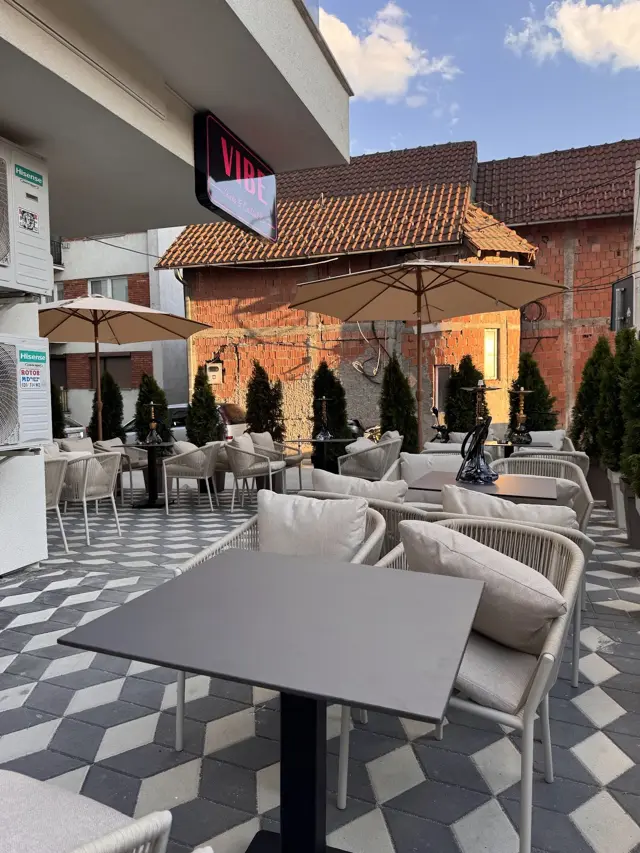
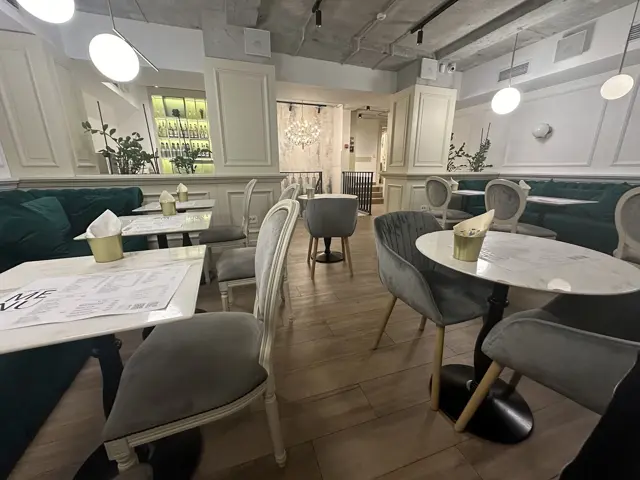
Where to try one


Hookah bazooka: what it is
The bazooka isn't part of the bowl, but it's something people look for along with a bowl. It's the hose handle, in other words the mouthpiece (see it in 3D), with gel inside. You freeze the gel and it cools the smoke as it passes through the handle. The Belgrade store the prices above come from describes it as a “part for drawing the smoke” and sells it for 800 dinars (€7).
A German retailer writes that the insert goes in the freezer for an hour or two and keeps cooling for about 30–45 minutes, depending on the temperature and how fast you smoke. In our listing, a Hooq Up bazooka goes for 1,000 dinars (€9).
Frequently asked questions
Which hookah bowl is best for beginners?
For drier, classic tobaccos and foil, a regular Egyptian bowl is enough, and one often comes with the hookah. If you smoke juicy or dark tobaccos or want a heat management device (HMD), get a glazed clay phunnel: the juice stays in the bowl, and clay takes in heat and gives it off slowly.
How much tobacco goes in a hookah bowl?
A regular bowl holds 10–12 grams, a bigger one 15–20. It also depends on the pack: a bowl that takes 22 grams when crammed full holds about 10 g packed fluffy, 15 g standard and about 20 g dense.
What's the difference between an Egyptian and a phunnel bowl?
An Egyptian bowl has holes in the bottom, usually five, and the juice from moist tobacco drips through them into the base. A phunnel has a spire in the bottom with an opening at the top, so the juice stays in the bowl. Egyptian bowls are mostly smoked with foil, while a phunnel works with both foil and an HMD.
Are silicone hookah bowls good?
They're handy for travel: they don't break, they're easy to wash and they don't need a grommet. Silicone heats up faster than clay, so keep an eye on the coals. Get a hybrid with glass, metal or ceramic inside if you can, because pure silicone doesn't hold heat well.
What is a hookah bazooka?
A hose handle, in other words the mouthpiece, with gel inside that you freeze so it cools the smoke. According to one German retailer, the insert keeps cooling for about 30–45 minutes. One Belgrade store sells it for 800 dinars (€7), and our listing has one for 1,000 (€9), as of September 2026.
How much does a hookah bowl cost in Serbia?
Bowls in our shop's listings go for 1,000 to 2,300 dinars (€9–20) as of September 2026, and one Belgrade store sells phunnel bowls for 1,200–2,400 (€10–21). An HMD there costs from 900 dinars (€8), or 800 on sale.
Know which bowl you need? Browse bowls and gear or all listings in the shop. The rest of the setup is in our guide on how to set up a hookah at home, and if you're still choosing a hookah, start with our guide to buying your first hookah. To find a lounge where you can try one, check the map.


